Jin Daily Tech Trivia: How fast do oil tankers move - and when do we actually feel an oil shortage?
By Shee Tze Jin
Jin Daily Tech Trivia: How fast do oil tankers move - and when do we actually feel an oil shortage?
Did you know? Typical large crude carriers cruise at around 13–15 knots in normal service - that’s less than 28 km/h, basically the speed of a bicycle rider.
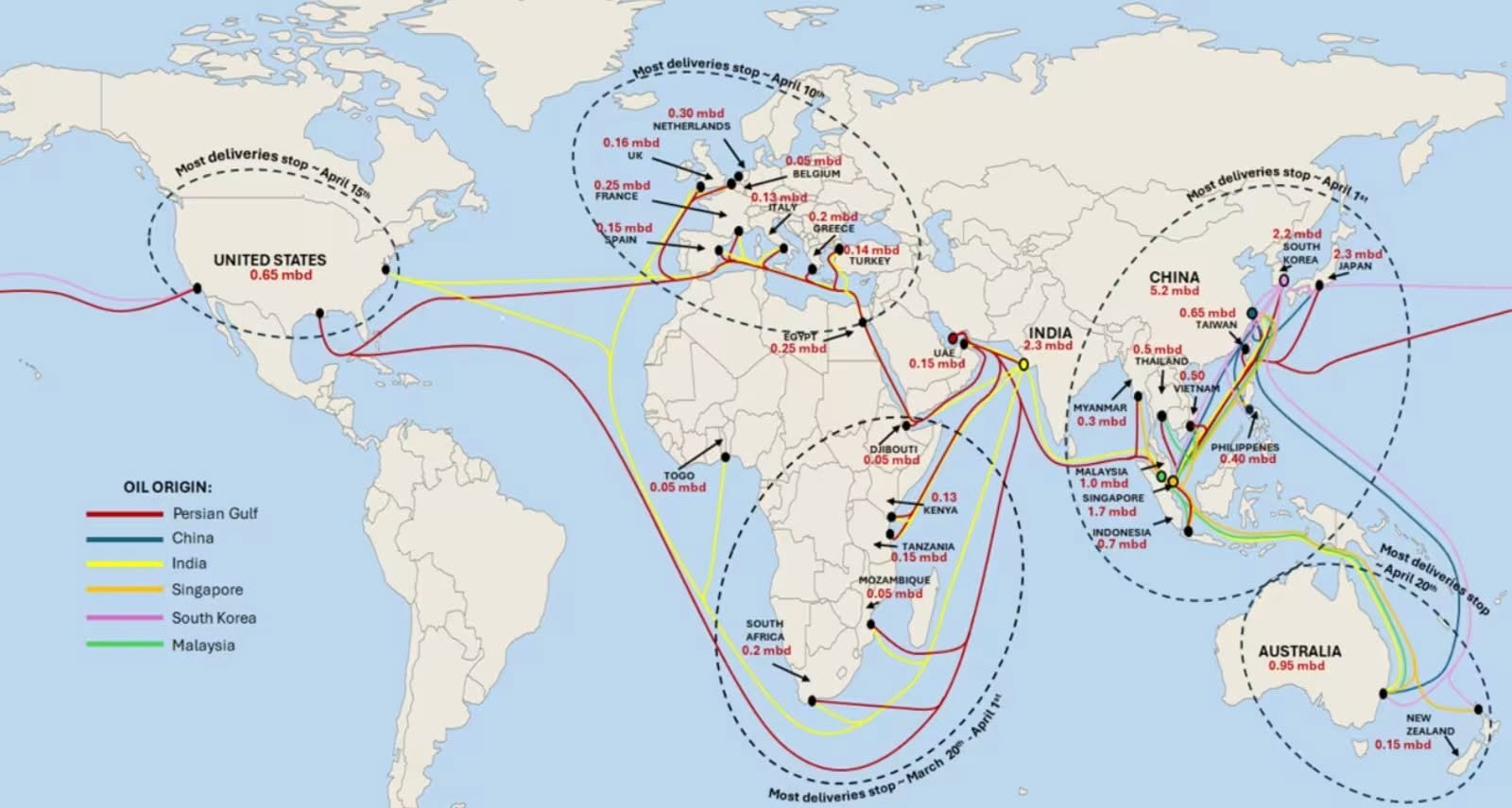
The Iran conflict started at the end of February, but oil tankers spend weeks at sea before reaching their destinations. On top of that, most countries maintain strategic reserves, so the impact isn’t immediate.
From shipping routes, we can estimate the delay effect:
India and Pakistan feel it first - around 10–20 days in Then East Asia Followed by Southeast Asia
Africa starts feeling the impact about a month later due to longer routes. Europe faces a similar timeline, but with an added twist - it has to compete with Asia for supply, which pushes prices up.
The U.S. is actually the least affected in terms of physical supply thanks to strong domestic production. However, global oil prices still ripple through and impact the cost of living.
The mbd (million barrels per day) figures show how much demand each region may need to “kill off” as missing cargoes turn into real shortages instead of just headlines.
By April, Southeast Asia could already be shedding around 0.3 mbd. Global losses may exceed 2 mbd in May and approach 3 mbd by June if governments don’t aggressively release strategic reserves.
In short: The U.S. mostly imports the price shock. The rest of the world risks actual supply pain.
Winter is coming this week onward. Brace yourself.